On the Summer Solstice – Scarlet Tanager, Red-tailed Hawks, Yellow-billed Cuckoo

June 21st, 2009

Back home in northeast Georgia, we’re in the middle of a heat wave as summer officially arrives, with temperatures near 100 for the past few days, and more of the same in the forecast for next week. The rasp of cicadas rises and falls, and grasshoppers sing. Wasps, bees, dragonflies and other flying insects buzz and hum. Chimney Swifts chatter as they sweep low over the grass in the morning. Ruby-throated Hummingbirds visit the feeder and flowers on the back deck often. Red-eyed Vireos sing fast and constantly all day, but stay deep in the woods. Now and then I hear the sharp wheet of an Acadian Flycatcher from down near the creek.

The highlights of a morning walk for me – trying to beat the worst of the heat – were the summery call of a Yellow-billed Cuckoo, a pair of Red-tailed Hawks and a juvenile, and a Scarlet Tanager perched in a treetop and singing.

About 7:30 this morning it was already very warm and humid when I left the house. The sky was covered in high, rumpled clouds that drifted apart and faded away as I walked, clearing the way for another blistering sunny day. Around our yard the songs of a Northern Parula and a Pine Warbler sounded shady and cool. A Great-crested Flycatcher called whreep. Downy Woodpeckers and Red-bellied Woodpeckers rattled. Two Phoebes hunted from low branches.

Seven Crows stalked in the grass of a neighbor’s lawn across the street. Several Robins were scattered across the grass of another yard, and a couple of Robins sang from treetops. Blue-gray Gnatcatchers called spee from a thicket. Bluebirds flashed their colors all along the way, very active, and some perched in treetops and sang. Bird songs and calls generally were scattered and muffled and mostly in the distance, with a few exceptions – the dry cawp-cawp-cawp-cawp of a Yellow-billed Cuckoo, the lisping song of a Phoebe, the warbling of House Finches – and the enthusiastic songs of several Mockingbirds. One that sings from an area near the small pond does a near-perfect imitation of a Kingfisher’s rattle, as well as the scream of a Red-tailed Hawk, and variations on Carolina Wren, Brown-headed Nuthatch, White-eyed Vireo, Blue Jay, Cardinal and several more.

Goldfinches passed over, trailing their potato-chip calls, House Wrens sang cheery, energetic bursts of song here and there. Carolina Wrens, Chickadees, Titmice, Blue Jays, Cardinals and too many Brown-headed Cowbirds sang or called.

When I got to the old field, a Red-tailed Hawk was sitting on top of a pole overlooking the highway. Several mornings during the past week, two Red-tailed Hawks and one juvenile have been around this area – the juvenile often screaming while the adults perch quietly. This time, while I was watching, a second Red-tailed Hawk flew up and joined the first one on top of the same pole. Both of these were adults. They lifted their wings, looking as if they had a little trouble finding footing, but then they both settled down and sat there sharing the space, facing in opposite directions. I walked on, and when I saw them again on my way back, one had flown to the next pole out over the highway. A third Red-tailed Hawk – the juvenile – then circled high over the same area, crying repeatedly.

Earlier in the week a single Indigo Bunting sang almost every day in or near the field – sweet-sweet, chew-chew, sweet-sweet – but this morning it wasn’t there.

As I got close to home again, I heard the squeaking calls of Brown-headed Nuthatches, the long dry trill of a Chipping Sparrow, and saw several Bluebirds perched in trees and flying from place to place. But the best part of the walk came just as I reached our driveway, when I heard a few hoarse bars of a song and saw a tiny shape in the leaves at the top of a water oak across the street. It was a glass-red Scarlet Tanager, singing, in the same territory where one sang all day every day last summer.
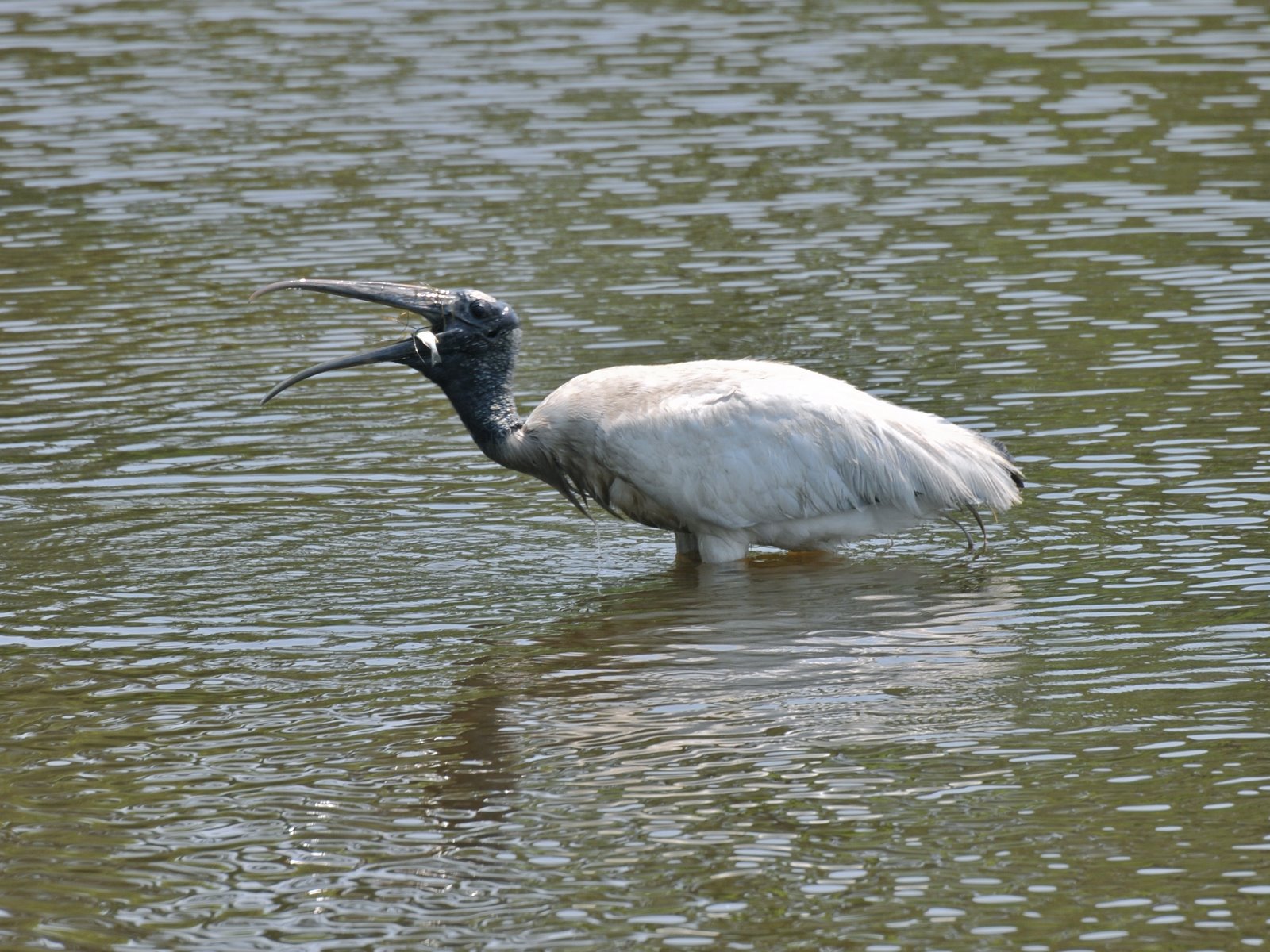
Wood Stork, Gull-billed Tern and Other Activity Around Marsh Ponds

June 18th, 2009

In addition to the Black-necked Stilts and Ospreys, many other birds were active around the Willet Pond and Ibis Pond on Kiawah. Clate got some amazing photographs – the best part of these postings by far! Click here to see a slide show.


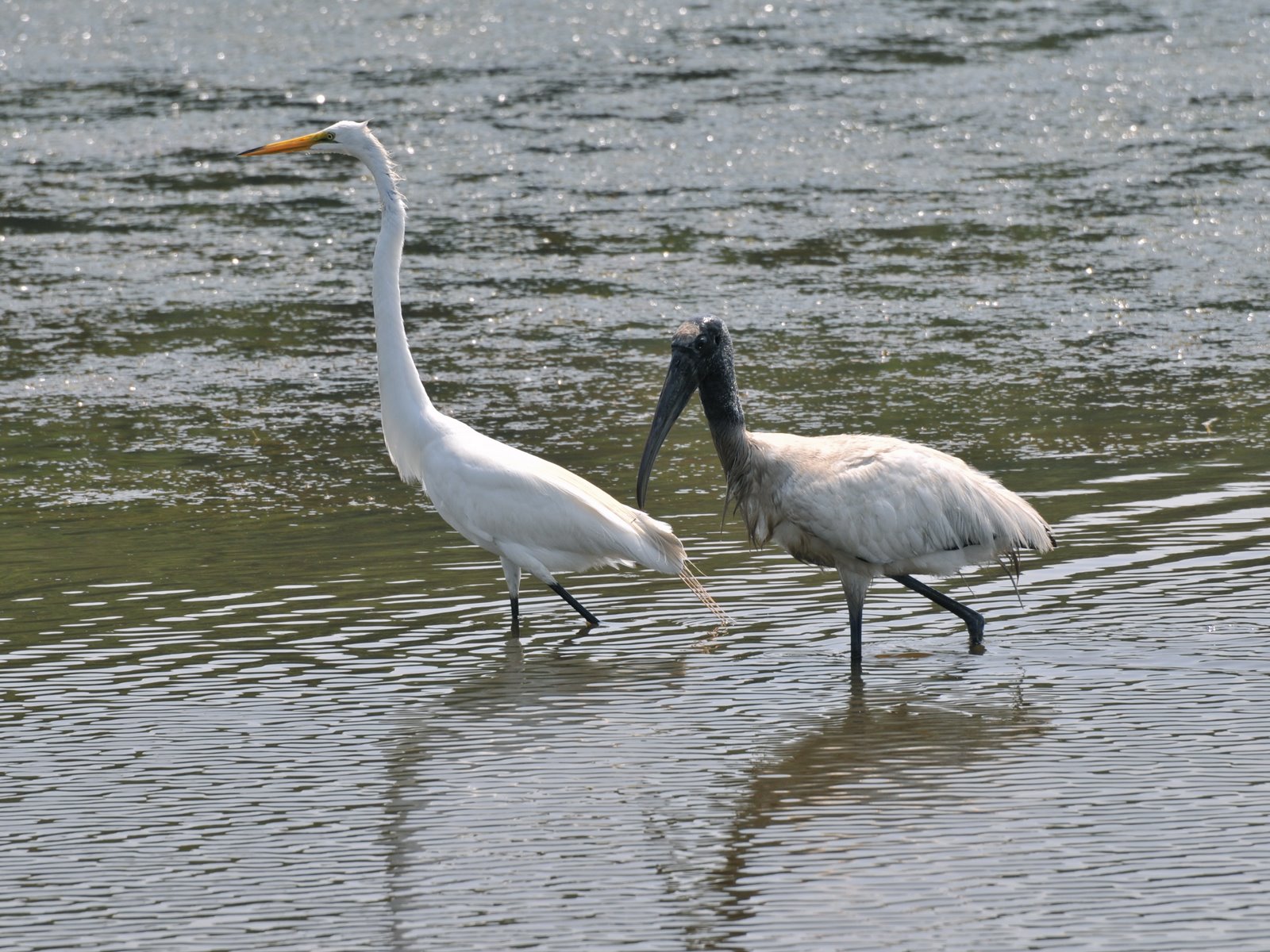
Four Wood Storks soared overhead and then flew in to wade in shallow water with Great Egrets, foraging for small fish and other prey. Two Glossy Ibis foraged on the far edge of the Willet Pond, too far away to see their dark blue-green and rust-colored plumage well, though their shapes and long down-curved bills were distinctive. Twice I saw a fairly large, rufous-orange bird fly up out of the grass and back down again, so warmly colored I think it must have been a King Rail.

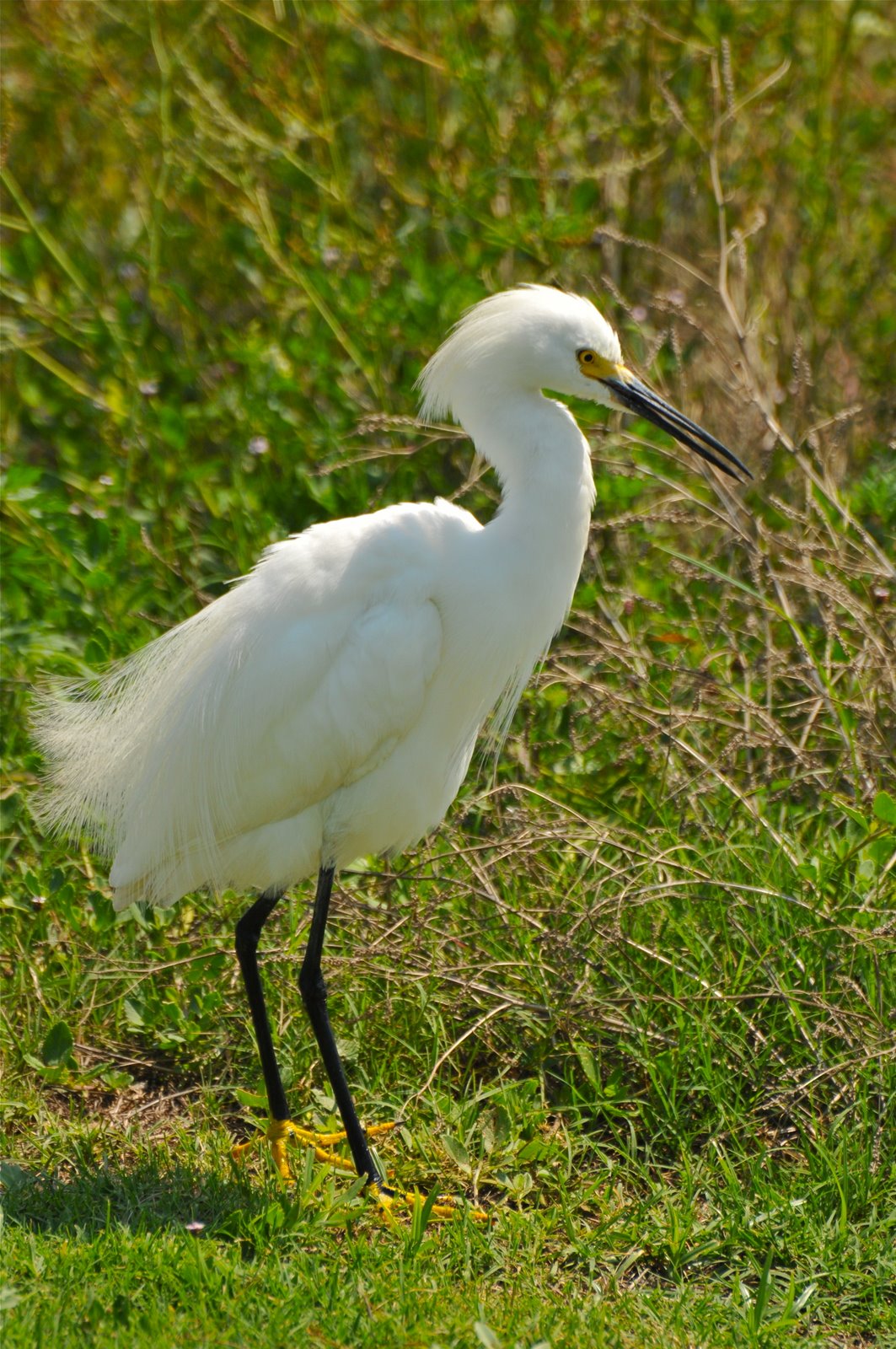
Snowy Egrets, with their bright yellow “golden slippers;” Tricolored Herons in blue-gray and white, with a thin ribbon of orange down the throat and neck and hints of purple and mauve; and at least one Little Blue Heron foraged in open areas of shallow water. Many Red-winged Blackbirds sang and flashed the colors in their wings, and an Orchard Oriole – with handsome chestnut-red body and black hood – perched in the top of a shrub and whistled a clear, musical song.

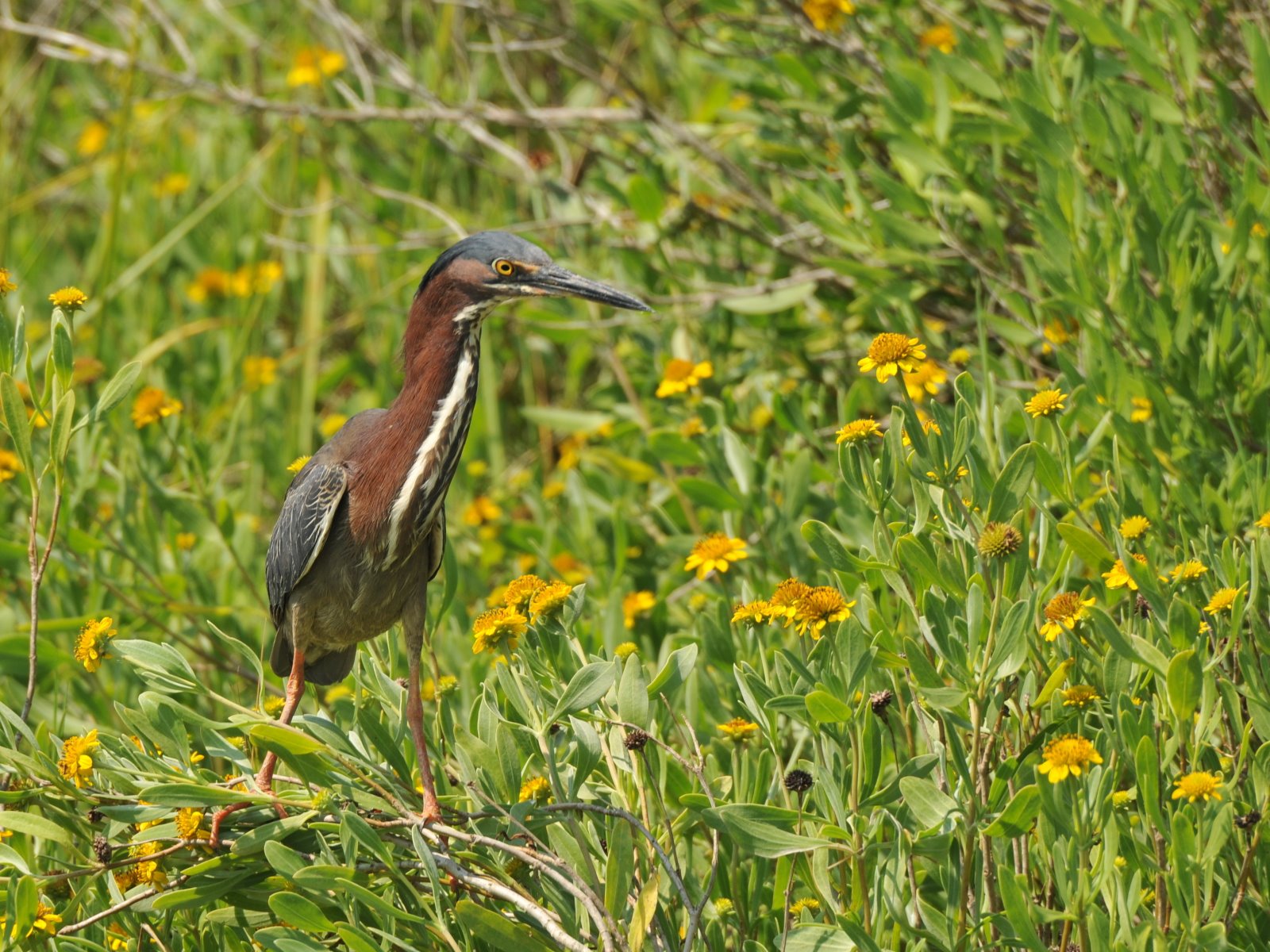
Two Green Herons stalked in the grass and shrubs near the edge of the water. Lots of Laughing Gulls flew over and all around us, perched on the rail of an observation deck, and dove down to fish, and three or four Royal Terns flew by.

Four Least Terns were among the most fun to watch, fluttering, hovering and diving into the water. These small, graceful terns are considered species of concern because the sandy beaches they need for nesting habitat are also increasingly popular and heavily used for recreation.

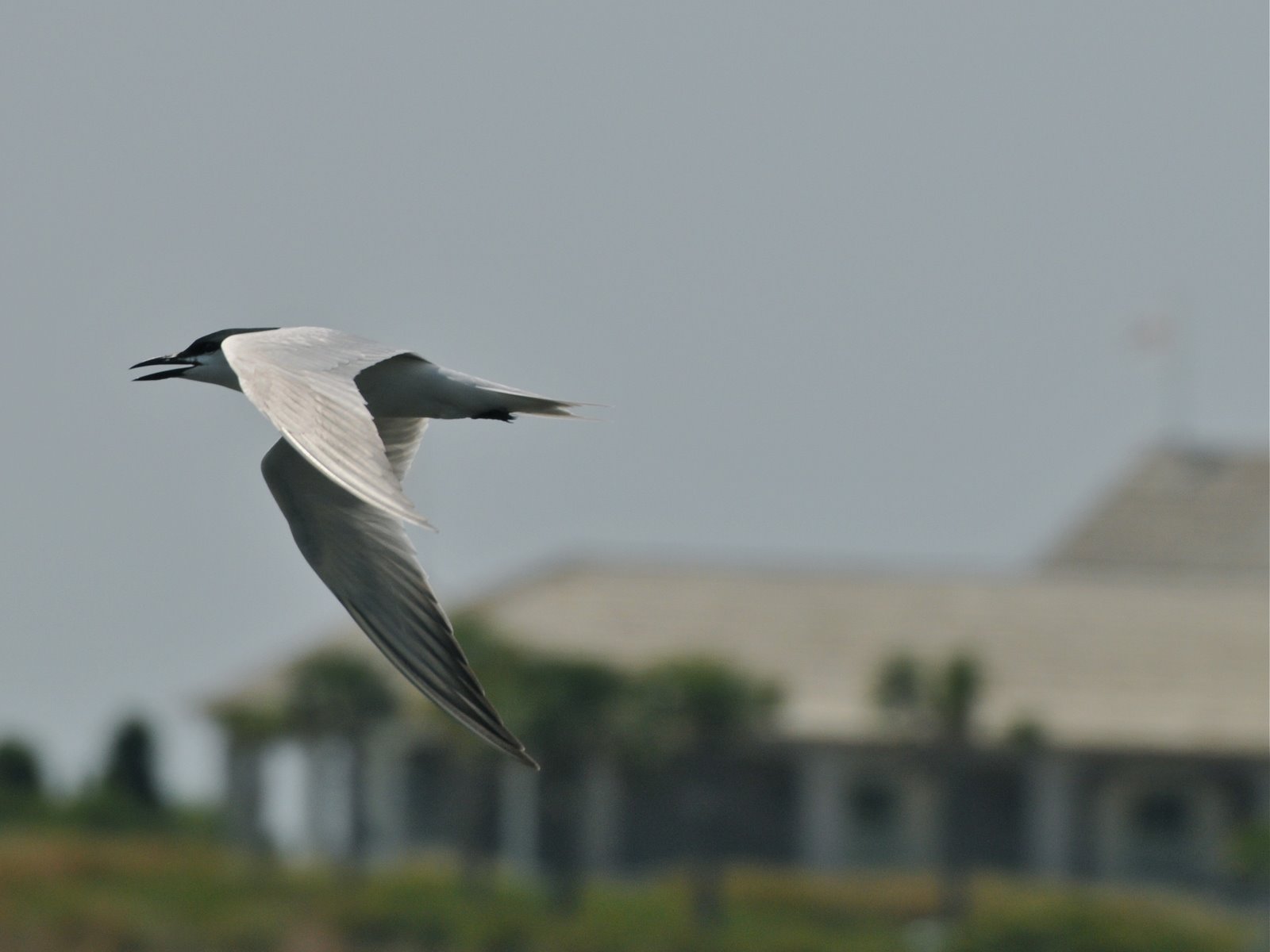
We also saw this beautiful Gull-billed Tern flying over the Ibis Pond. I’m not familiar enough with terns to be completely sure of the identification, but its size, coloring and rather heavy, all-black bill were distinctive. If any readers could let me know, I’d be very interested to confirm if I’ve correctly identified it. (Click on the image for a larger view.)

Osprey in Owls’ Nest, Kiawah

June 17th, 2009

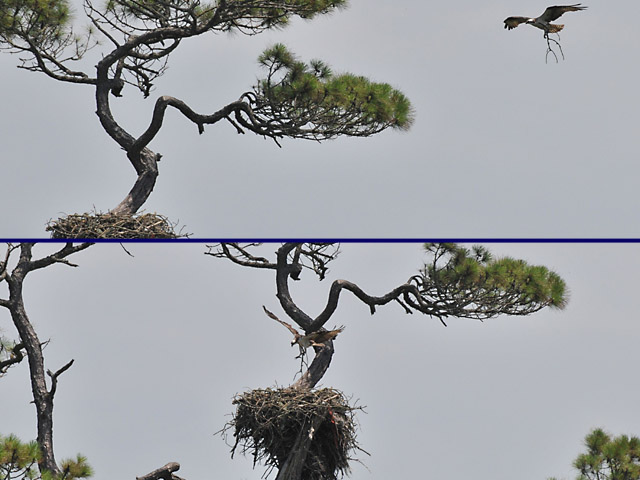
On our visit to Kiawah Island, SC, last week, a pair of Ospreys were active around a nest occupied by a Great Horned Owl in mid-March. (March 15 blog posting) Photos by Clate Sanders

The two Ospreys were present around the nest area each of four times we went there during the week – soaring, perching in pines very near the nest, and bringing fish to nearby pines to eat. Twice one of the Ospreys flew to the nest and sat in it for a few moments, then left it. On the last day we were there, we saw one of the Ospreys fly to the nest with a stick and appear to be working it in.

After we returned home, I found an April 18 report from the nature program on Kiawah Island that “the last owlet at Willet pond is now gone and the Ospreys have moved in, they were spotted re-building the nest and courting.” (Kiawah Island Golf Resort) So I’m not sure what was happening now, two months after that report – but it seems like they have reclaimed the nest even after it was used by the Great Horned Owls.

Black-necked Stilts, Kiawah Island

June 15th, 2009

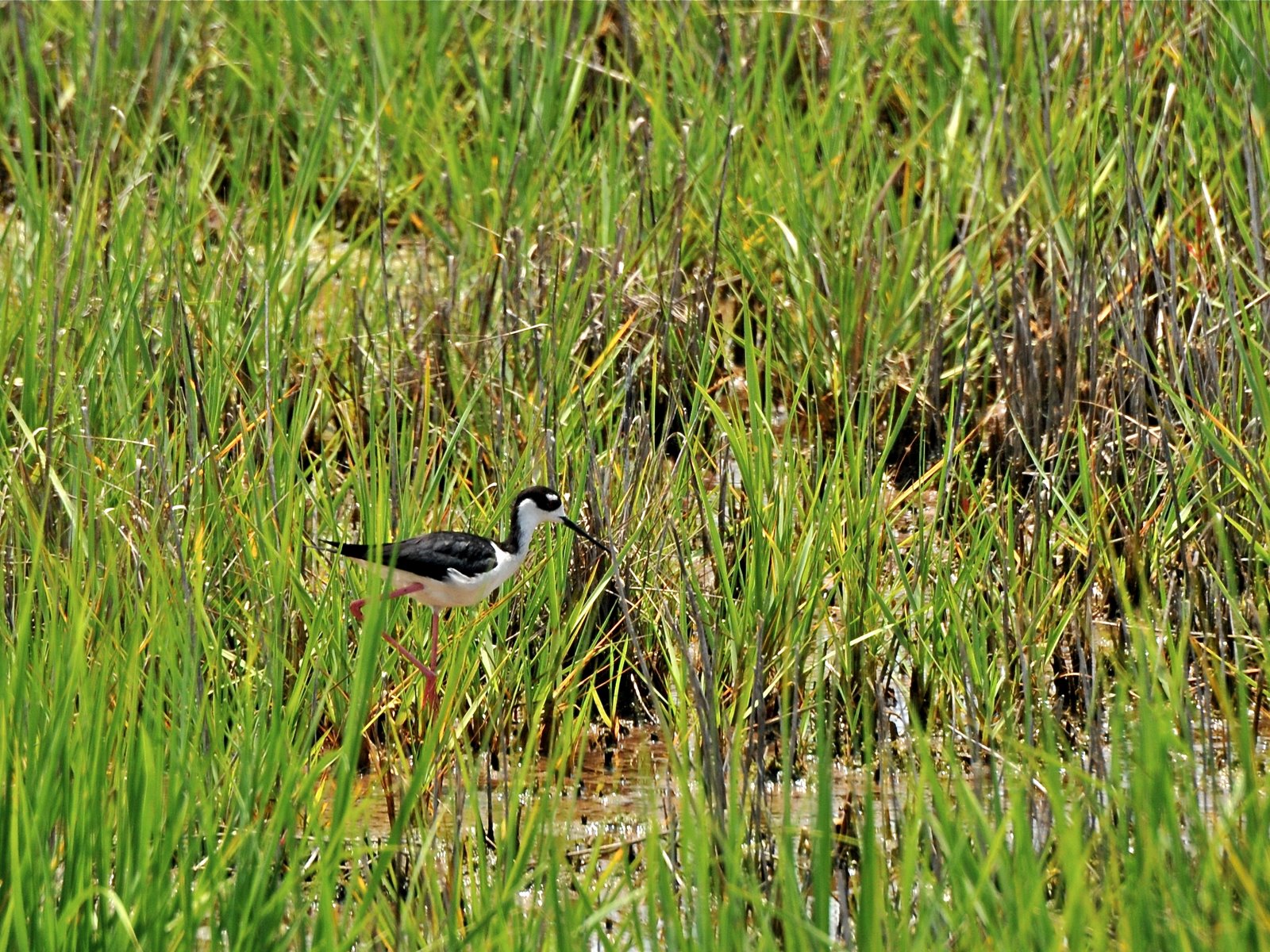
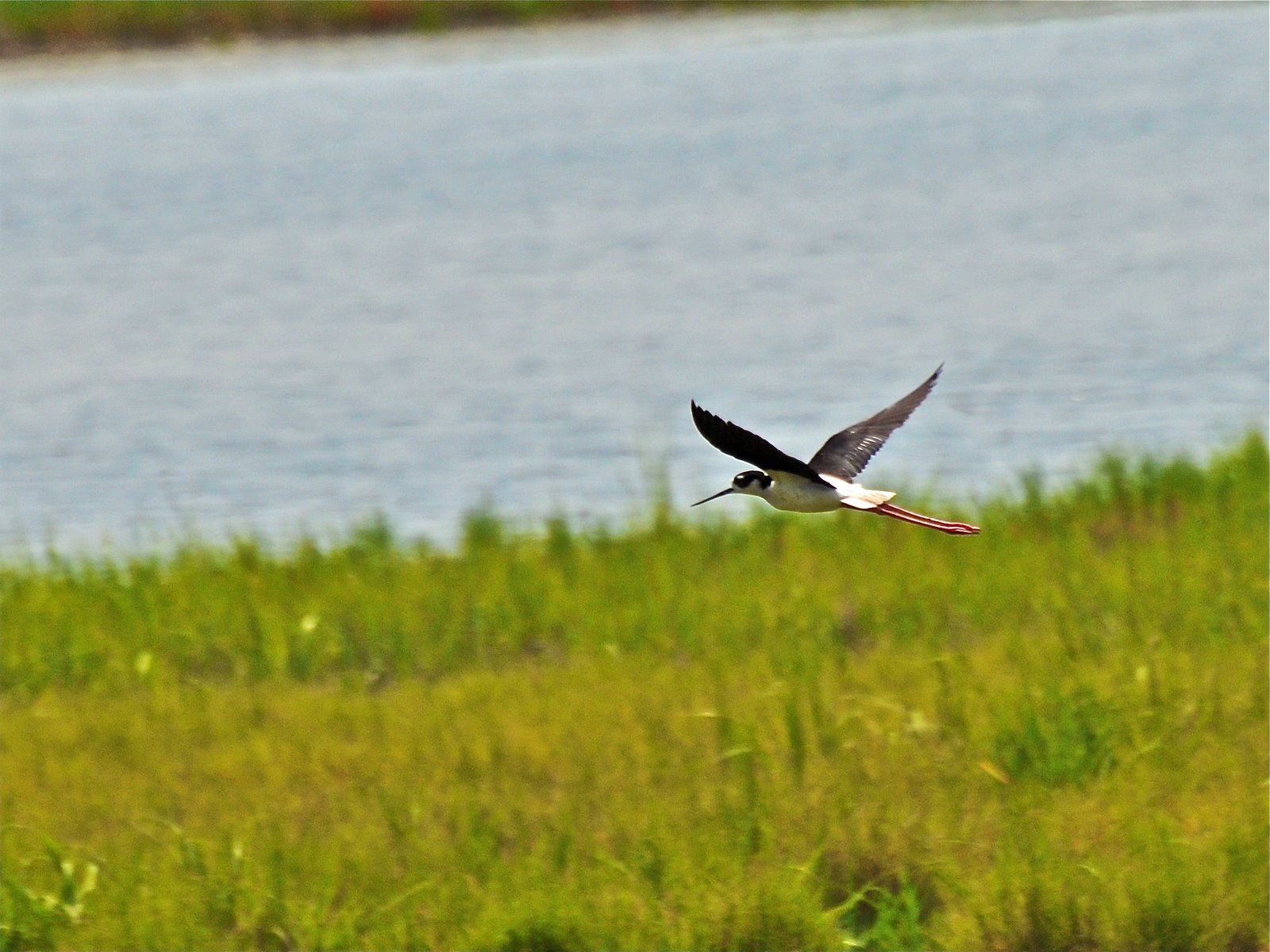
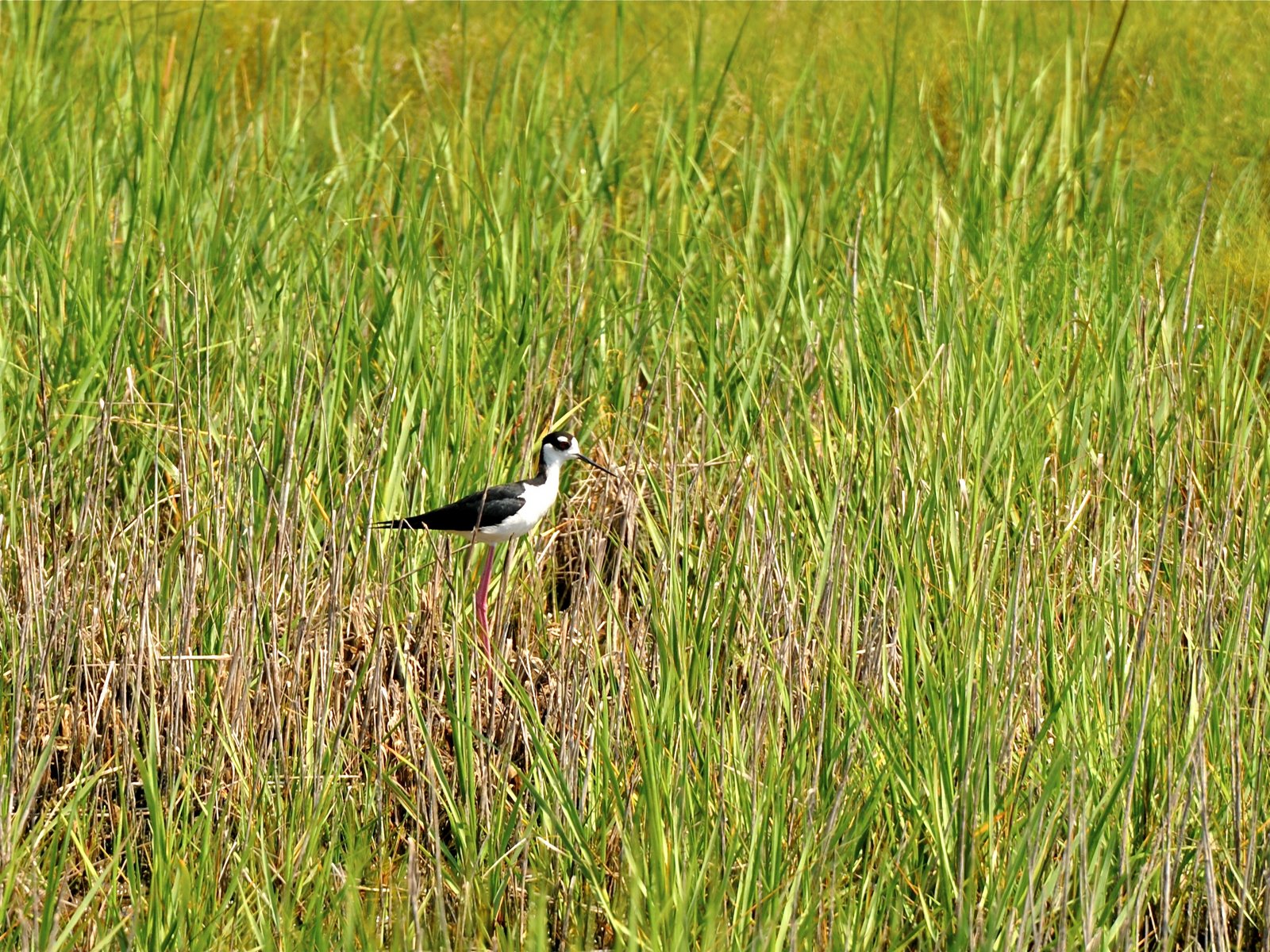
The birding highlight of a visit to Kiawah Island last week was finding Black-necked Stilts in the marsh grasses around the Willet Pond – along with four Wood Storks, two Glossy Ibis, several Great Egrets, Snowy Egrets, Tri-colored Herons, at least one Little Blue Heron, two Green Herons, four Least Terns, Royal Terns, lots of Laughing Gulls, and two Ospreys around the nest occupied in March by Great Horned Owls. Photos by Clate Sanders

We first saw the Black-necked Stilts Sunday, June 7, at the Willet Pond. I had been watching herons, egrets and the wood storks, when I began noticing agitated calls that sounded to me like repeated breeks, and saw something fly up around one of the Wood Storks. To my amazement, it was a Black-necked Stilt – a very elegant, slender, black-and-white patterned wading bird with long thin red legs. For me, it was a life bird. I had never seen one before anywhere, and had not known they might be here on Kiawah. A pair were flying up again and again around the Wood Stork and calling, and finally, after five or ten minutes, the stork spread its wings heavily and drifted to a different spot, out of the grass, in an area of open shallow water.

After seeing those first two Black-necked Stilts, we began to see others spread out all through the marsh grass around the pond. They flew up here and there briefly, sometimes flew from place to place, low over the edge of the water, and several stalked out into open areas of mudflat and shallow water, where we were able to see them very well. Their black, white and red coloring caught the eye quickly.

A June 5 report on the Kiawah Island Golf Resort’s website says that Black-necked Stilts are a rare summer visitor to Kiawah. “This year, we are fortunate to have several pairs on our island. In fact, according to our Town Biologists, “the stilts are exhibiting behaviors which lead us to believe they may be nesting.”

Cooper’s Hawk Pair

June 1st, 2009

Today looked like the first of June – a hot, clear, sunny day with a deep blue sky and gleaming big white cumulous clouds – and felt like it, with afternoon temperatures in the 90s. Late in the morning as I was walking, a pair of Cooper’s Hawks flew over together just above treetop level. They were a handsome sight against the sunny blue sky, with ruddy breast, wide bands in the long, narrow, slightly rounded tail, white tip at the end of the tail, and intricate dark and white patterns in the wings. But they were most remarkable for the significant difference in their size. The male looked small and compact next to the much larger female, though he, too, showed the same shape and plumage, and flew with the sturdy, rather heavy flapping characteristic of a Cooper’s Hawk.

Dawn Song of a Great Crested Flycatcher

May 28th, 2009

Already the early morning chorus is much less exuberant and crowded than three or four weeks ago. This morning one cardinal began singing a little after 5:00 am, joined about 5:15 by a bluebird and several minutes later by a phoebe. About 5:45 other birds began to sing or call, including the pik-a-tuk calls of a summer tanager, the spees of blue-gray gnatcatcher and songs of Carolina wren, chipping sparrow, chickadee, titmouse and the whinny of a downy woodpecker. These are the birds I can hear from a window facing the front yard – not the woods and back where there might have been a Louisiana waterthrush, Acadian flycatcher, northern parula, red-eyed vireo, yellow-throated vireo, scarlet tanager, maybe even a wood thrush – or not.

The most persistent song this morning – and the closest to my open bedroom window – came from a great-crested flycatcher giving a soft, musical, almost purring two-part song. Over and over it called wheer, whurr; wheer, whurr; wheer, whurr. The sound was intimate and low, very different from its loud daytime calls. After 30 minutes or so, I have to say, it became a little monotonous. Still, it was unusual to hear, and interesting.

The dawn chorus, such as it was, ended about 6:15 with the flourish of a full, dry, drawn-out call from a yellow-billed cuckoo. A cardinal, bluebird, phoebe, and Carolina wren continued to sing here and there, as they would all day, and a summer tanager sang in the distance, but the first flush of early-morning music was over, and the sun was about to come up.

An Early Summer Day

May 24th, 2009

The day began with the song of a Wood Thrush, lyrical, flute-like notes drifting up through the leaves of the woods from somewhere down around the creek. The morning was cloudy and gray, the trees restless in a light breeze. I stood for several minutes in a fine, barely perceptible sprinkle of rain, feeling very lucky, just listening to the unexpected song, impossibly lovely and increasingly uncommon here.

There’s one other Wood Thrush singing in our neighborhood this spring, in a wooded area behind a small pond. Each year, there seem to be fewer, and each year I think that maybe we won’t hear one at all – so when I do, it feels like a gift.

From around the same area near the creek came the sharp WHEET-sit call of an Acadian Flycatcher, the bright whistle and tumbling notes of a Louisiana Waterthrush, the buzzy song of a Northern Parula, and the less-frequently heard dry, rising and falling cow-cow-cow-CAWP-cawp-cawp-cawp of a Yellow-billed Cuckoo.

A Pine Warbler trilled in the pines all around the edges of the woods, and very active Blue-gray Gnatcatchers called spee. A Yellow-throated Vireo sang in the trees behind a neighbor’s yard, a Red-eyed Vireo deeper in the woods, and a Great-crested Flycatcher called breet and whreep. The cries of a Red-shouldered Hawk soaring very high in the southeast sounded made it sound much closer than it was.

A female Ruby-throated Hummingbird made frequent trips to the feeder, now and then buzzing over to me and hanging in the air, coming closer and closer, checking me out. A couple of times another hummingbird zoomed past her like a warning shot, maybe the male, but a male never came to the feeder while I was watching, though their twittering calls were all around. The nest I watched a female construct four weeks ago sits empty on its pine branch, so I assume she’s built another somewhere else.

Rain clouds hung low, gray and dark all day, with occasional sprinkles, but despite the gloomy weather, there was a surprising amount of bird activity around our yard and woods. Now and then a breeze brought the summery scent of gardenias, now in bloom. I don’t think birds were unusually active today. It’s just that I happened to be out at the right times. Some of the observations were typical of an early summer day but others were surprising and interesting.

American Redstart

May 24th, 2009

Early in the afternoon while I was sitting outside reading after lunch, a female American Redstart – gray with yellow patches in wings and tail – flitted out of the foliage and briefly perched on a bare branch while she ate something. After that, I could hear two Redstarts singing among the leaves of the oaks nearby for an hour or more, but never could spot them. I was surprised to see and hear them, and don’t know if they are late migrants or maybe staying to nest, though usually I have not found them here during the summer months. Their cheery, high songs – sort of tsee-tsee-tsee or tseeta-tseeta-tseeta-tsee – and colorful behavior always brighten a day.

Hairy Woodpecker Pair

May 24th, 2009

A male Hairy Woodpecker flew to a spot high up on a tall dead pine calling as it arrived in an long, unusual string of loud wicka-chew sort of notes that sounded agitated or excited. Then it flew with loud peenk! calls to the lowest part of another pine trunk, where it met a female Hairy Woodpecker, and both immediately began tapping industriously on the trunk and stayed there working for several minutes.

A male and female Bluebird hunted from low branches in the back yard, and juveniles made zee-zee begging sounds somewhere among the leaves where I couldn’t see them, except for one that flew down to the grass and began pecking around and feeding itself. Meanwhile, a Phoebe called tsup-tsup as it perched on branches and swept out or down to the grass for insects.

Suddenly, a pugnacious little Carolina Wren flew to the top of a plant-hanger on the deck and sang very loudly and richly, continuing to sing as it made its way over each of the tomato cages on the plants in pots, then to the deck rail, to another plant-hanger, and finally into a hanging fern at the corner of the deck, where it scrabbled around deep in the greenery for several minutes. The female wren came along quietly a few minutes behind him, carrying small twigs in her bill and following his general path across the deck, but instead of going into the fern, she flew to the branches of nearby bushes, and the male followed her.

A warm-red male Summer Tanager made its way, quiet and leisurely, through the oaks and pines, not calling, not singing, stopping here and there to preen and wipe its bill.

A Brown Thrasher Conflict

May 24th, 2009

Two Brown Thrashers also were moving around in the branches of the white oaks near the house, and one sang for four or five minutes, then fell silent. A few minutes later, one of the Brown Thrashers suddenly hurtled out of the oaks in a loud, fierce squabble and tangle with something. Because of the cries – which sounded alarmed and hurt – at first I thought it must have been caught by a small hawk, but it wasn’t. It happened so quickly I never saw what the other bird was – only a feathered, furious ball of the two flying out and falling to the ground together – but I think it was probably the other Thrasher. If so, their conflict sounded and looked pretty serious. One Brown Thrasher flew away – I did not see what happened to the other bird, but it must also have flown, in a different direction.