White Ibis, Little Blue Heron and Clapper Rail

March 20th, 2010

In addition to the missing Osprey nest nearby, highlights around the Willet Pond on Kiawah included a fine Gray Catbird sitting among brown marsh grass, and several Red-winged Blackbirds, whose shoulder patches gleamed very bright, glistening red. At least three dozen Pied-billed Grebes were scattered over the pond, floating in small groups here and there. Two American Coots swam in and out of tall grasses. Many White Ibis fed in the grass, mostly screened from view, but visible now and then, and at least one Glossy Ibis. A Great Blue Heron, a Great Egret, and one Little Blue Heron – dark purplish-gray-blue – stalked in water and grass not far away, and several Tri-colored Herons emerged in spots all over the pond and marsh. A couple of Forster’s Terns flashed over – we saw a lot of them this trip. They seemed to be everywhere, which was fine with me. No matter how many times I see them, they never lose their magic.

Just as we turned to leave, a plump, compact bird with a brownish, streaked back, stubby little upturned tail and a long thin orange bill swam out of a clump of grass on the edge of the pond near where I stood, and disappeared into another grassy patch. A Clapper Rail – I think. I’ve never before seen one so close and so clearly. Once again, I’m not completely sure – it might have been a King Rail – but other reports from this same pond in recent days have mentioned a Clapper, so I’m thinking that must have been what it was. I’ve heard them many times, but never had such a vivid, though very brief, view.

Does it matter if it was a King Rail or a Clapper? A Short-billed Dowitcher or a Long-billed? Well, yes and no. I’d like to know for sure, and I keep trying to learn more and to be more observant, but so often in birding it just doesn’t happen. You see a bird – then it’s gone, and there’s no instant replay. You’ll never know for sure. Though I try to get it right, it’s not the certainty that I enjoy – but almost exactly the opposite. The worlds of possibility, the challenge, the surprises, the reminder to appreciate how much we do not know – for me this is the pleasure and the point. The glimpses of something seen, but not captured or held, give birding its breath and spirit – as well as its frustrations – and make it not a static, knowable, countable thing, but an always fresh and somewhat mysterious joy. And there’s always next time.

A Missing Nest

March 19th, 2010

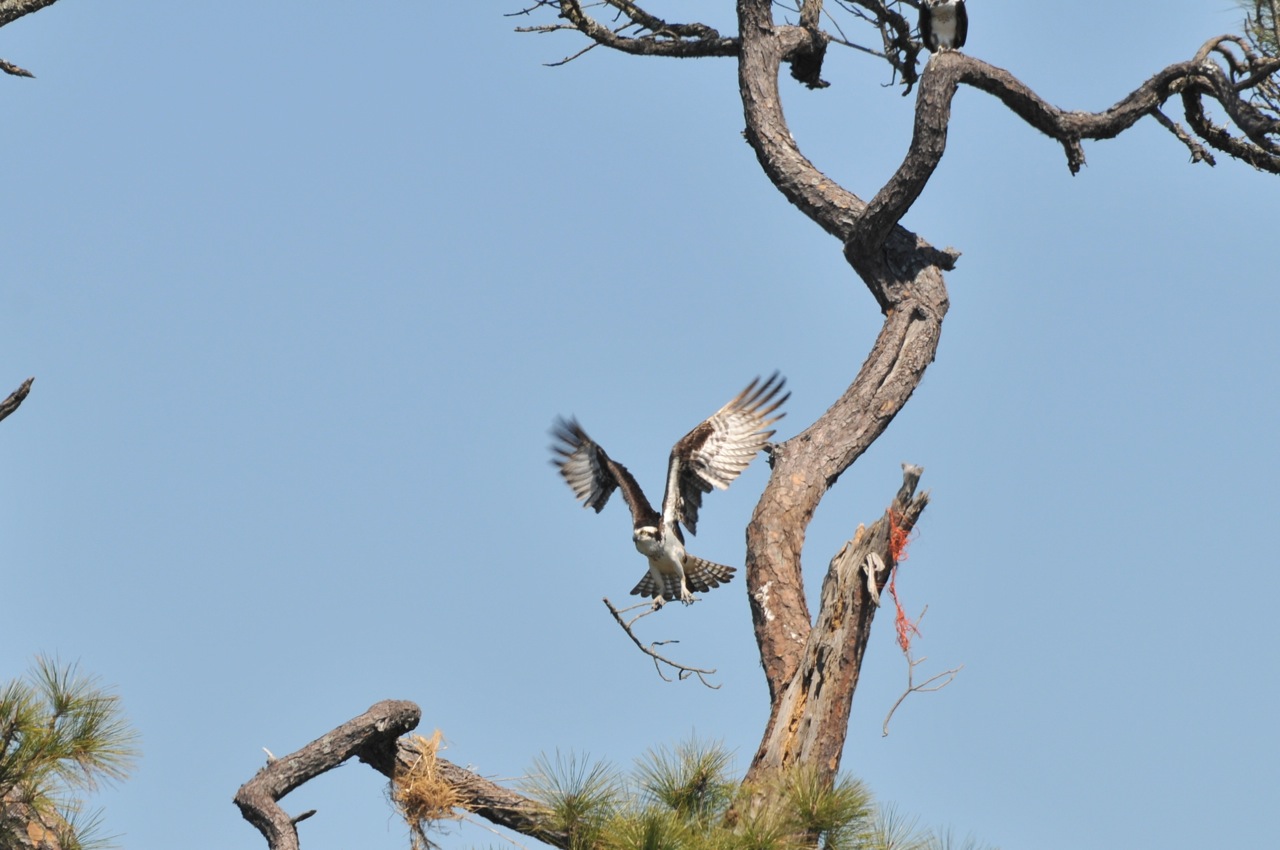
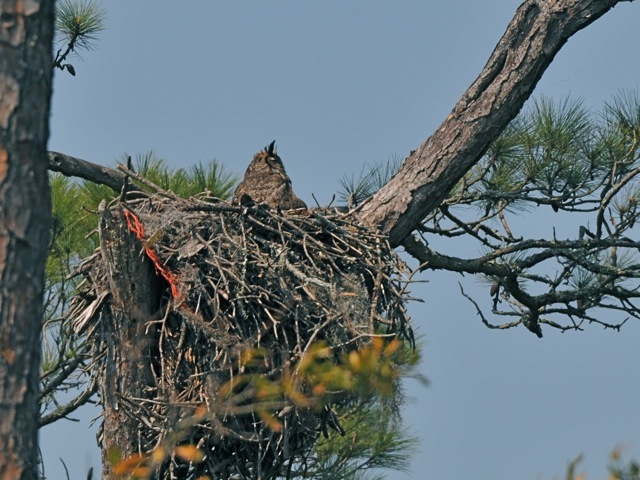
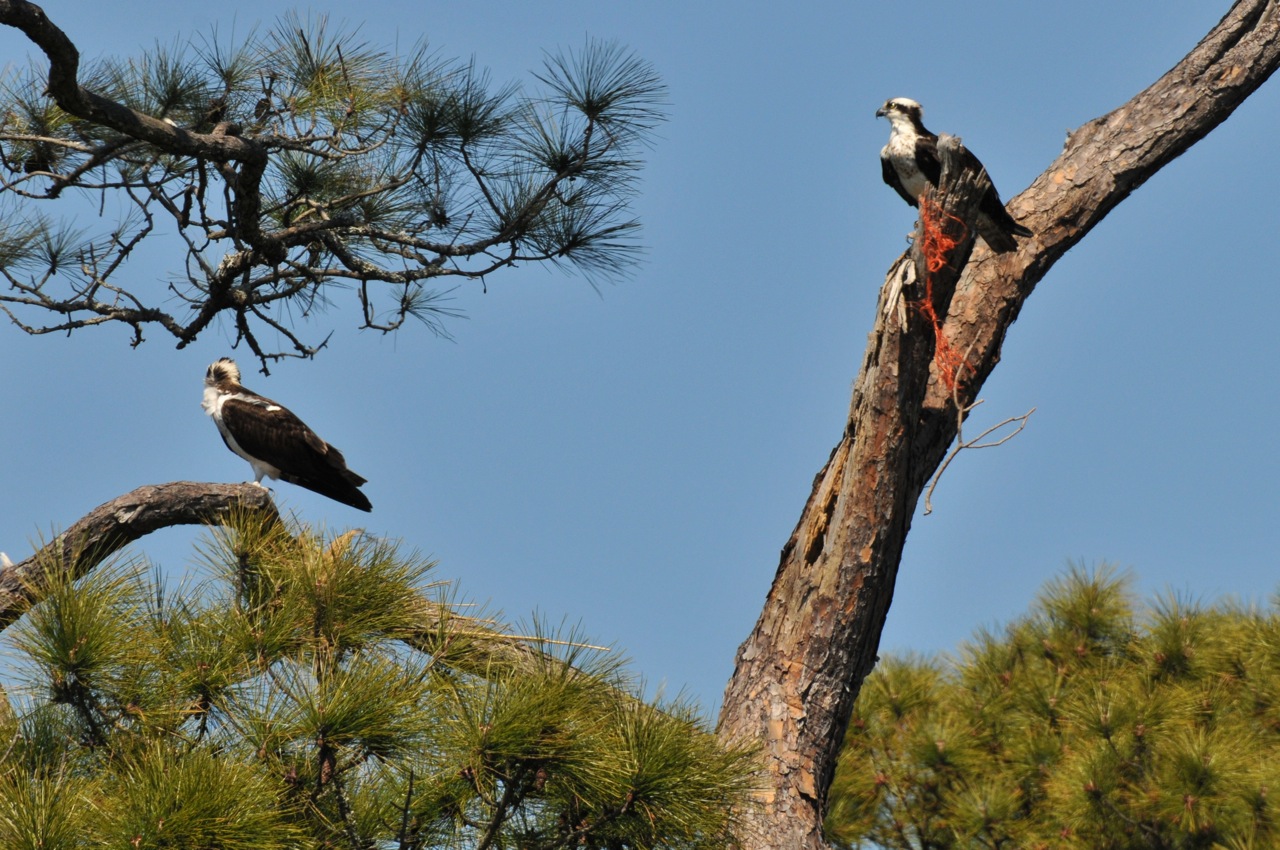
One of the places we visited each day on Kiawah March 8-11 was the site of an Osprey nest in a pine, where last year a Great Horned Owl had taken over the nest in March, but the Ospreys returned in June. This time we were sorry to find the nest gone – but a pair of Ospreys perched in the tree where it had been. A few remains of the nest could be seen on one branch, but the large bulk of it was gone, maybe fallen in a storm. The Osprey pair seemed distressed that it wasn’t there and uncertain of what to do.

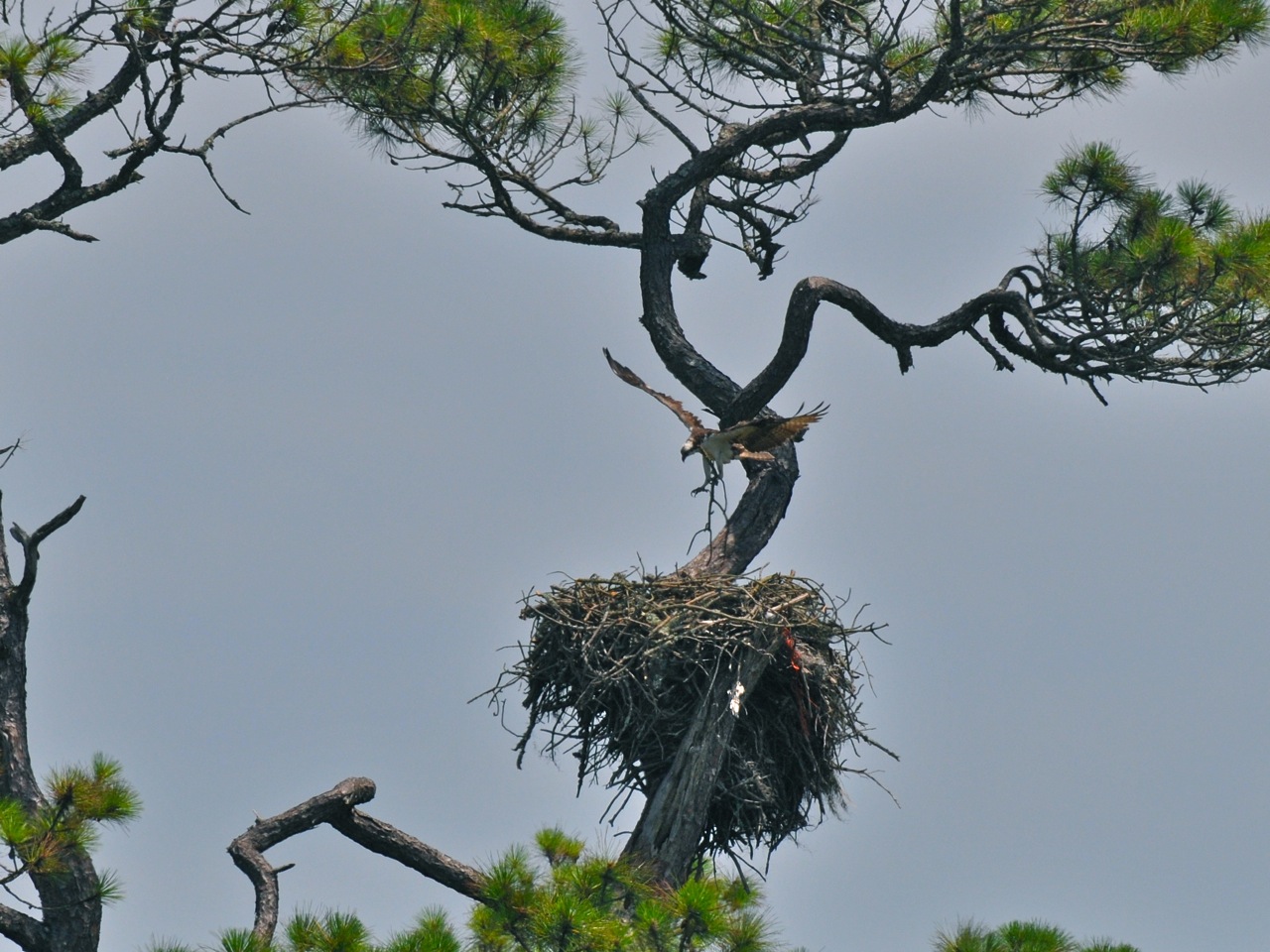
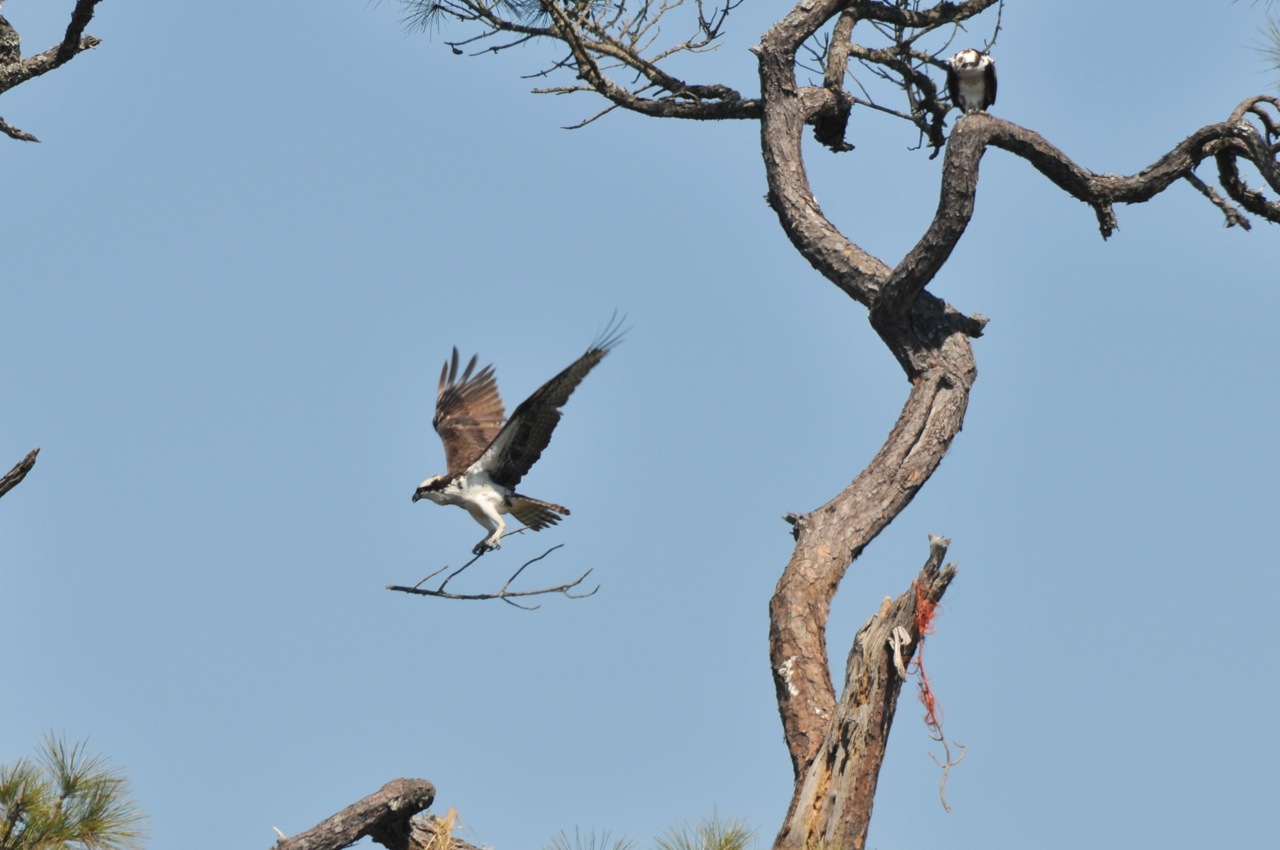
While we were there, we watched as one flew in several times with a branch and tried to find a spot for it, presumably trying to start a new nest. They didn’t have any luck on the few days we were there. Each time, the Osprey bringing a stick flew in with it, sometimes perched, tried it out in different spots, then flew away with it again, giving up for the time.

I’ve so far been unable to reach anyone with the Kiawah Island Nature Program, but I hope to find out more about what happened to the nest – and whether or not this pair can start a new one this year.

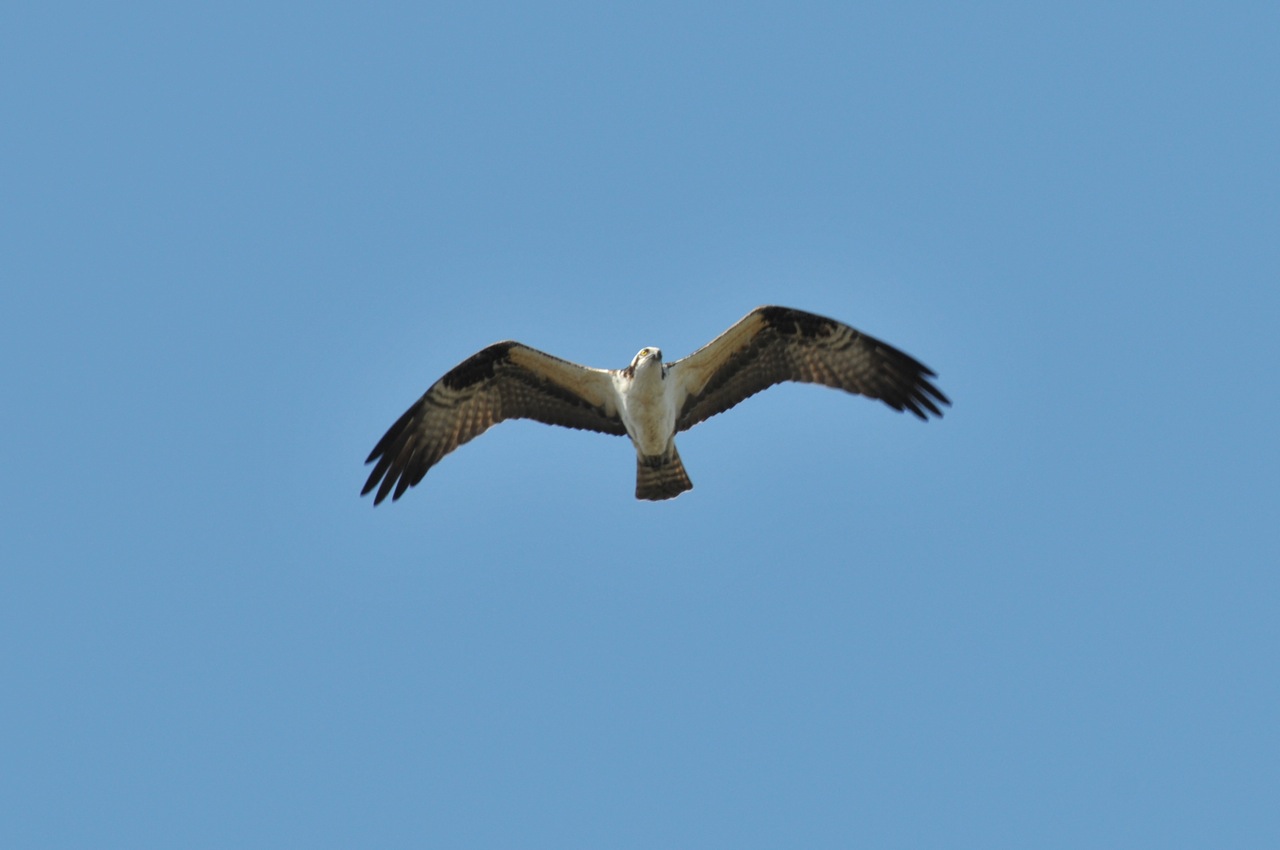
The first four photos here show the Ospreys March 8 of this year, perched in the tree and bringing a stick to the spot where the nest used to be, and one Osprey in flight. The Great Horned Owl sits in the old nest in March of last year; and the last photo shows an Osprey bringing a stick to the old nest last year in June. CLICK on each photo to see it larger.

Bald Eagle on the Beach

March 18th, 2010

Late one morning last week, toward the eastern end of the beach on Kiawah Island, a young Bald Eagle stood on the edge of the surf, near low tide, a long way across the sand from where I had just walked out on a path through the dunes. It was so far away, and so big that at first I thought it was a person bending over. When I took a closer look and saw an eagle, it made me take a sharp breath in. It was mostly dark brown, but with a lot of white speckling, and its head was partially mottled white with a dark eyestripe – so I think it was a third-year immature. Its legs looked very thick with brown feathers and its head and bill impressively large and strong. It stood on the sand with waves lapping around its feet, just at the edge of the surf, putting its head down again and again and tearing up big chunks of something. The main impression I had while watching it was simply and purely how big it was. Amazing. I couldn’t figure out what it was eating – I thought maybe some kind of large fat fish.

I walked toward it very gradually, stopping to watch several times over a period of several minutes, not wanting to scare it away, if possible. Then I finally turned to head on up the beach, still without getting too close. Soon after I did, it lifted its wings and flew over me, low and not far, to a perch in the dunes where it sat, facing toward me. So then I walked over to see what it had been eating – and it turned out to be, of all things, a dead possum.

When I came back down the beach an hour or more later, the half-eaten possum still lay there, the tide further out, but no eagle, no gulls, or any other birds in sight.

I never carry a camera myself. For me, it’s a distraction. Almost all the pictures here on this site, Clate took – so it’s really nice when he’s along. But in this case, all I have is words to try to capture how very impressive the young eagle was.

This was one of three Bald Eagles we saw last week on Kiawah. The other two included another immature and one magnificent adult with gleaming white head and tail that circled low over where I stood on the bank of a lagoon. All three were quiet. I never heard them call.

Tidal Pools

March 18th, 2010

The tide was far out and still receding as I walked further east on the beach, coming to a long, deep tidal pool that lay between me and the edge of the waves. Beyond it on a stretch of wet sand well above the waves sat two American Oystercatchers, conspicuous with their big bold patterns of black, brown and white, and long, bright, almost shimmering red-orange bills. Funny how they can look, at the same time, so comical and so regal. Though I watched for a while, they stayed settled down on the beach, not standing or moving around. Usually when I’ve seen Oystercatchers before, they’ve been both very active and vocal, but these were quiet. When I walked back by them later, they were still there in the same spot, contentedly settled, soaking up the warm morning sun.

Still further up the beach, the dunes on my left receded and I discovered a great spot. Beyond the ripple marks of high tide on the sand lay a large depression hiding a series of shallow tidal pools. In them and on the sand and muddy flats around them were dozens of shorebirds, and in the distance stretched islands of grasses and sand, and more dunes.

Dowitchers and Dunlins fed in the shallow water of the pools. Sanderlings, Willets and Semi-palmated Plovers foraged on the sand and edges of the water. Two Black-bellied Plovers – widely separated – each patrolled a stretch of sand. One Lesser Yellowlegs danced gracefully in water on the edge of a pool. Forster’s Terns fluttered like flashes of white light over the water, and two Ospreys flew over several times, back and forth from somewhere they were fishing. Among the grasses in the distance were a Snowy Egret, a Tri-colored Heron, and a Great Egret.

The two Black-bellied Plovers – relatively tall, long-legged plovers that stand erect, with head held high, were still mostly in grayish winter plumage, but were beginning to look a little more intensely black and white. A couple of times one flew up a short way and back, showing the black patch under the wings. Both spent most of their time trying to keep all of the other birds, especially the other plovers, off their stretches of sand – for the most part unsuccessfully. The smaller birds kept venturing back, and the Black-bellied Plovers spent more time chasing them away again than feeding.

The Dowitchers – plump, medium-size grayish sandpipers (in winter) with very long bills – kept their heads mostly down, often submerged, probing and feeding intently, though two or three paused very briefly to preen. I couldn’t figure out if they were long-billed or short-billed Dowitchers and never heard their calls – the only way I might have been able to tell for sure. My best guess is Short-billed, because they are said to be more likely on the beach, rather than in fresh water – but it’s only a guess.

The lone Lesser Yellowlegs – a slender sandpiper with long yellow legs – moved with quick, crisp movements, delicate and distinct, with a thin, spindly grace, an airiness about it – quite different from the more businesslike and stocky Dowitchers.

Shorebirds – especially all the sandpipers – are always a challenge to me, and just pure fun. It seems I have to learn half of them all over again every time I get to the beach or the marsh. But each time I see them, they become a little more familiar, and a little more of the different personality of each comes to life. They’re a little like sparrows – so much alike at first glance that it’s tempting not even to try, but then as you get to know them, so different you wonder why you didn’t see it to begin with.

As I headed back toward home, passing again the long tidal pool between me and the distant edge of the waves at low tide, an Osprey stood deep in the water of the pool, bathing. It sat there for minutes at a time, just looking around, in water halfway up its wings, now and then dunking its head and whole body, thrashing the wings – taking a good long leisurely bath. I tried to keep my distance and walk slowly, still thinking it would probably fly, but it didn’t seem disturbed at all and only left the water and flew, with a big swoosh and splash, when I was well past it.

Red-throated Loon

March 17th, 2010

One highlight of a visit to Kiawah Island, South Carolina, last week – March 8-11 – was a beautiful, close-up view of a Red-throated Loon.

It was low tide, late morning on a sunny, chilly day. We were walking east on the beach, close to the edge of the waves. Forster’s Terns flew along the edge of the surf, hovering, plunging and flashing silvery white. We passed few other birds, widely scattered – Willets and Sanderlings on the edge of the waves, Brown Pelicans, Ring-billed Gulls, Herring Gulls, Cormorants and one Laughing Gull, flying over. Further east up the beach, we came to several small Dunlins foraging in the sand with Sanderlings, Semipalmated Plovers and four pale Piping Plovers.

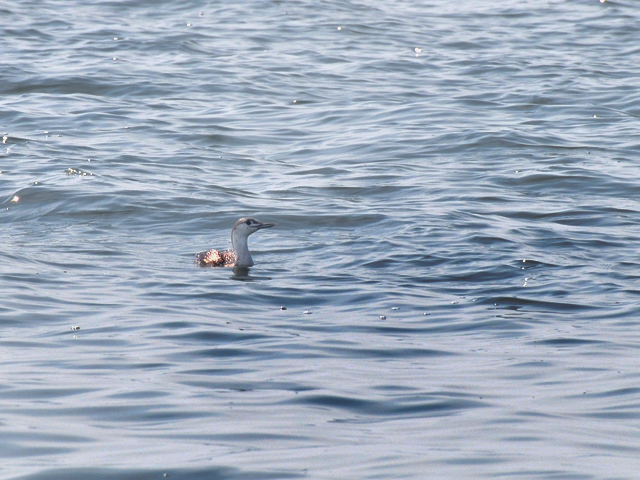
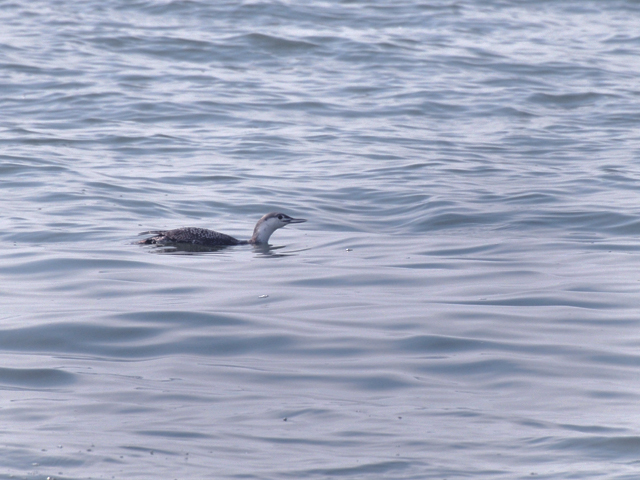
But the best part was seeing the Red-throated Loon at very close range. It was floating in the waves not far from shore, its long body riding low in the water, and a graceful white neck with the bill held slightly up. It dived repeatedly, staying up for only a few seconds at a time before diving again, but it stayed close and was up long enough to see the slender, silky-white throat, the distinct jagged edge of the dark crown and back of its neck, and the dark back speckled with white. These are two of several very good photos Clate took.

Though I’ve “seen” more than one Red-throated Loon before, it was always further out off shore, difficult to see well, and fellow birders were telling me that’s what it was as I peered through a scope – but this was the first time one was so clear and close, so that I really felt I could see it well, and had time to watch it for a while.

Red-throated Loons breed in very far northern reaches of North America and Eurasia, and are only found this far south during the winter. During breeding season the head and neck become gray and the dark red throat appears, making it more colorful – but the graceful shape, sleek white throat, black crown and speckled back of the winter plumage are elegant in their own way. “Numbers of this loon have declined recently in several parts of its range in North America,” notes the species account in Birds of North America, “although it is not clear why.” *

When we finally walked on, after watching the loon for several minutes, a very large white bird with long, slender wings tipped in black flew directly over our heads – a Northern Gannet. This was another unusually close view – I could even see the film of gold on the head and the dark-outlined shape of the long, pale, thick bill. Powerful and sleek, it sailed over, circled once, and almost literally disappeared, so quickly gone. I could find no other Gannets in sight, at that time or any other time on this trip to Kiawah, but there may have been others too far out to see.

*Jack F. Barr, Christine Eberl and Judith W. Mcintyre. 2000. Red-throated Loon (Gavia stellata), The Birds of North America Online (A. Poole, Ed.) Ithaca: Cornell Lab of Ornithology.

Hermit Thrush in Wet Snow

March 2nd, 2010

Our front yard was busy this afternoon with soft, wet snow falling and covering much of the ground for a while. A colorful Pine Warbler, Yellow-rumped Warbler, Carolina Wren, a pair of Downy Woodpeckers, Tufted Titmice, Carolina Chickadees, one or two Goldfinches, a Mockingbird and a big Red-bellied Woodpecker went back and forth from the feeders. Several Chipping Sparrows, White-throated Sparrows, Dark-eyed Juncos, a pair of Northern Cardinals and one noisy Robin fed on the ground below the feeders and under the shrubs.

Two Brown-headed Nuthatches spent most of their time in the trees above the feeders, not doing their usual loud squeaky-dee calls, but calling back and forth to each other in soft one-syllable bleets.

My favorite bird of the afternoon was a Hermit Thrush that sat on a low branch of an oak, flicking its wings and quickly raising and lowering its tail each time it called a low, throaty tchurp – over and over. Because it perched one way and then another, I had a good view of the smooth olive-brown of its back, the cinnamon color of both the tail and the edges of the wings, and the big, dark, bold spots on its pale breast. Later it dropped to the ground to forage with the sparrows and juncos, though pretty much keeping its distance from the main group and staying watchful.

A couple of Mourning Doves sat in the trees nearby and in the back yard several American Crows cawed loudly for a long time – I finally saw a Red-tailed Hawk leave the top of a pine in the woods and glide away with the Crows in pursuit. Earlier in the afternoon, a Cooper’s Hawk sailed very fast across the road, through a powdery blur of falling snow, and over the treetops low and out of sight.

White-breasted Nuthatch

February 25th, 2010

Cold weather has returned, and yesterday morning was drizzly and gray when I stepped out on the deck. From a dark stand of pines just inside the woods, a White-breasted Nuthatch called ahnk! It’s not a very glamorous sound, but it’s one I don’t hear often around here, and the bird making it is a cool, graceful little bird with a black crown and half-collar, blue-gray back, snow-white throat and breast, and a long, sharp bill, and to see one is a little like seeing a celebrity for me.

Although sociable, pine-loving Brown-headed Nuthatches are regular visitors to our feeders and the woods around the neighborhood, the more aloof White-breasted Nuthatches are not, probably because they prefer mature deciduous woodland and mixed forest, while our woods are younger and rougher, with few large, dignified trees, either pines or hardwoods. Every once in a while though, like today, one or two come around.

I tried for several minutes to find the White-breasted Nuthatch, but the light was gray and blurry. It gave its one-syllable ahnk call several more times, but remained invisible somewhere among the misty pine branches and foliage, a little too far away to see.

Blackbird Flock – Mostly Common Grackles

Later in the morning a large flock of blackbirds flew in and spread over the grass and trees in several yards in the neighborhood. There were maybe 500 birds – a very rough estimate. All I saw were Common Grackles and a few Red-winged Blackbirds. I could not find any Rusty Blackbirds among them, though there were many in the trees and further away that I couldn’t see well, and they were, as usual, restless and moving from place to place. There’s something disorienting about trying to distinguish one blackbird from another in a flock on the ground. It’s like an optical illusion in motion. I know what I’m supposed to see, but just can’t quite find it. But it was a good feeling just to stand among so many and to hear them – a loud congregation of creaky blackbird voices all around. When a truck drove past they all flew up with that sudden thumping rush of wings and moved in waves, even further away, too soon. It was nice to see a fairly large flock again, and I hope maybe to run into them again.

More and More Birdsong: Phoebe and Brown Thrasher

February 21st, 2010

All weekend was warm and sunny, with temperatures this afternoon in the mid 70s, encouraging lots of birdsong and activity. The morning began with the song of an Eastern Phoebe sitting in the branches of a white oak just outside our windows, after Phoebes have been pretty quiet for the past several weeks. All day it has continued to sing and to do its chatter call around the house – so I’m hoping that maybe it’s one of a pair that might nest here again this year, after successfully raising three young Phoebes in a nest over the garage last summer.

Eastern Bluebirds were singing, and a pair is spending a lot of time around the nest box, the male sometimes sitting on top of it. On a walk through the neighborhood, I heard several others singing and saw four or five pairs together.

A Pine Warbler continues to give its musical trill all around the edge of the woods and around the house and comes to the feeder now and then. This morning for a while it sang in the branches of a water oak right over my head – he’s a bright, warm yellow, very colorful. Cardinals, Carolina Wrens, House Finches, Chickadees, Titmice – all are singing, so the mornings are beginning to sound more and more full of birdsong, especially on sunny days. A Red-shouldered Hawk called from somewhere over the woods to the east, not close. A Yellow-bellied Sapsucker made the rounds of trees in the front yard, and although I still haven’t heard one around our yard in a while, a Ruby-crowned Kinglet chattered in a thicket down the road.

Late this afternoon a Brown Thrasher sang from a low branch in a pine tree, the first time I’ve heard one sing this season. It sang for several minutes, running through several different pairs of phrases, but it sang from a perch screened by branches and pine needles and not very loudly – so maybe he’s rehearsing, not quite ready for the open stage of a treetop branch. Usually Brown Thrashers here do start singing in February, but maybe they’re a little late this year because of the cold, wet weather.

Red-tailed Hawk and Rabbit

Late this afternoon I stopped along the edge of the old field to look at a dead rabbit lying in brown grass. As I walked toward it, a Red-tailed Hawk flew out of a low perch in a tree on the edge of the field, into the open for a moment, then back into the trees, further in where the pines were denser. I looked for it and had just about given up when it flew out and across the road and away. I walked away feeling guilty about keeping the hawk from its prey, and hoping it would come back soon after I left – though with all the traffic and people around here, it must be fairly accustomed to such interruptions.

Brown-headed Nuthatch and Pine Warbler – Not So Friendly Competition

February 19th, 2010

After what seemed like a very long spell of cold, windy days, the weather here has gradually begun to warm up. Yesterday was still chilly, in the 40s, but sunny and with lighter winds. All day several American Goldfinches were active around the two feeders on the back deck, with three or four Tufted Titmice, a couple of Carolina Chickadees and a Carolina Wren hunting for whatever they could find in old plant pots and corners. Red-bellied Woodpeckers called their spring-like quurrrrr from the woods, and a Pine Warbler sang, making its way through the pines, changing the quality and mood of its song from time to time.

It’s probably the same Pine Warbler that visits the feeders out front regularly, a colorful male with warm yellow breast and soft streaks. Today I happened to be watching when a little Brown-headed Nuthatch – also a regular visitor – flew at the warbler aggressively. At first the Pine Warbler held its ground, but in only a second or two gave up and flew away, at least temporarily. Minor disputes like this are pretty common around the feeders, and the small but feisty Nuthatches don’t hesitate to take on larger birds and seem to win a confrontation more often than not.

The species account for Brown-headed Nuthatch in Birds of North America* notes that they are particularly competitive with Pine Warblers for food and foraging habitat in winter flocks. Studies seem to show that sometimes one wins and sometimes the other. The Nuthatches also try to chase off  Chickadees, Titmice and even a Downy Woodpecker sometimes – but most of the time they seem relatively content to share with these species.

*James H. Withgott and Kimberly G. Smith. 1998. Brown-headed Nuthatch (Sitta pusilla), The Birds of North America Online (A. Poole, ed.) Ithaca: Cornell Lab of Ornithology.

Chipping Sparrow, Yellow-bellied Sapsucker, and a Cooper’s Hawk

Meanwhile, dozens of American Robins still are scattered all around our yard, feeding on the ground with White-throated Sparrows, Dark-eyed Juncos, Mourning Doves and Cardinals, and eating the red berries of the Savannah hollies. A Northern Mockingbird perches on the mailbox or on a small pecan tree in the middle of a juniper thicket. And a solitary, very wary Hermit Thrush ventures out from the bushes now and then to feed with the other ground birds. We don’t seem to have as many Yellow-rumped Warblers as in previous winters, but a few are usually around, especially in the wax myrtles, and one comes fairly often to a feeder.

Late yesterday afternoon when I went out for a walk, the sky was soft blue and white, with a high, pale sliver of a crescent moon. It was chilly, temperature in the 40s, but not windy, and very pleasant. A Cardinal and a Bluebird sang. In the distance, Chickadee, Titmouse and House Finch also were singing. A dozen or more Chipping Sparrows, looking at first like little mounds of grass in motion, flew up from the roadside like sparks as I walked by. One perched on the edge of a dense green cedar, facing the sun. With warm reddish-brown crown, white stripe above the eye, brown-streaked wings and gray breast, a bird that so often looks anonymous in flocks came fully into focus.

Small birds were active all along the way, but the defining presence throughout the neighborhood right now is Robins – they’re everywhere, in every yard, in many trees, clucking, squeaking, running across the grass, pulling up worms, and often standing and looking around.

I stopped for a while by a thicket of weeds and bushes and trees near the corner of two streets, listening to the calls of White-throated Sparrows and Eastern Towhees, and also heard the chatter of a Ruby-crowned Kinglet – a welcome sound because these usually common winter residents have been hard to find here recently. A woodpecker flew to the trunk of a pecan tree, and turned out to be a young Yellow-bellied Sapsucker – its throat barely red, its black, white, gray and buff coloring blending in perfectly with the bark of the tree, and the feathers on its crown ruffled up into what looked a crest. It made quick scratching sounds as it hitched quickly around the tree and up in a spiral, stopping to check out some of the holes in several rings of holes around the trunk and branches.

When I had walked several yards further down the street, a Cooper’s Hawk came flying very low over the grass from the direction of trees in the thicket behind me. Sleek blue-gray, with russet breast, it only flapped once or twice, then sailed with wings outstretched, staying close to the ground. It glided over a low hill and disappeared into some large trees near a pond. A few minutes later, as I walked on, it flew from that same area and crossed the road ahead of me, flying now at treetop level up a hill and past three houses, disappearing this time further away, into more trees.

Northern Flicker and One Cedar Waxwing

A little further down the road, on my way back toward home, two birds perched in the top branches of a bare pecan tree, almost side by side, both facing the sun. One was a big handsome Northern Flicker, with long, sturdy bill, spotted breast, black breast-band and a scarlet crescent on the nape of its neck. Its brown, black and gray plumage was all ruffled up by the wind. The other was a solitary Cedar Waxwing, looking sleek and petite beside the Flicker, tawny brown and gray, with black mask and neat crest, it was completely undisturbed by the wind. Its belly glowed yellow in the low-slanting light. I could hear its single high, thin note, but could not hear or see any other Cedar Waxwings around, though I know there must have been others somewhere near.
Hermit Thrush at the Window

February 15th, 2010

Earlier yesterday morning when I checked out the front yard, all the usual suspects were around – Chickadees, Titmice, a pair of Downy Woodpeckers, Red-bellied Woodpecker, two Brown-headed Nuthatches, and a Mockingbird back and forth from the feeders, a pair of Eastern Bluebirds – the male several times sitting possessively on top of the bluebird house – and several White-throated Sparrows, Chipping Sparrows, Dark-eyed Juncos, Mourning Doves and Robins foraging on the ground. Among the ground birds was one Hermit Thrush, which flew to the cover of some wax myrtles when startled and stood there, raising and lowering its tail. Then – to my surprise – it flew again, this time into a Savannah holly tree right outside the window where I was standing. It hopped from branch to branch only inches away.

It may be the closest I’ve ever come to a Hermit Thrush, though I’ve often watched one from not far away. It ate a holly berry, then hopped to another branch and stopped, with its back to me, looking over its shoulder with a white-ringed eye, its slender bill slightly tilted up. The spotted breast looked muted, and overall it was a fawn brown, rather dull color, except for the reddish tail – but the behavior and personality of a Hermit Thrush are intriguing. Even though it may come out into the open often and regularly, it looks the part of an eccentric hermit, wide-eyed and easily spooked. It stops and looks around frequently, flicks its wings and hops or runs with a characteristic gait. It’s only and completely in the eye of the beholder, but to me a Hermit Thrush always looks slightly guilty and impish – but proud of itself.

We rarely hear the hauntingly beautiful song of a Hermit Thrush here, since it’s only here for the winter, so we get a somewhat different view of its life.

Nervously, this one raised and lowered its cinnamon tail several times, then hopped to another branch and flew away, back toward the wax myrtles.